
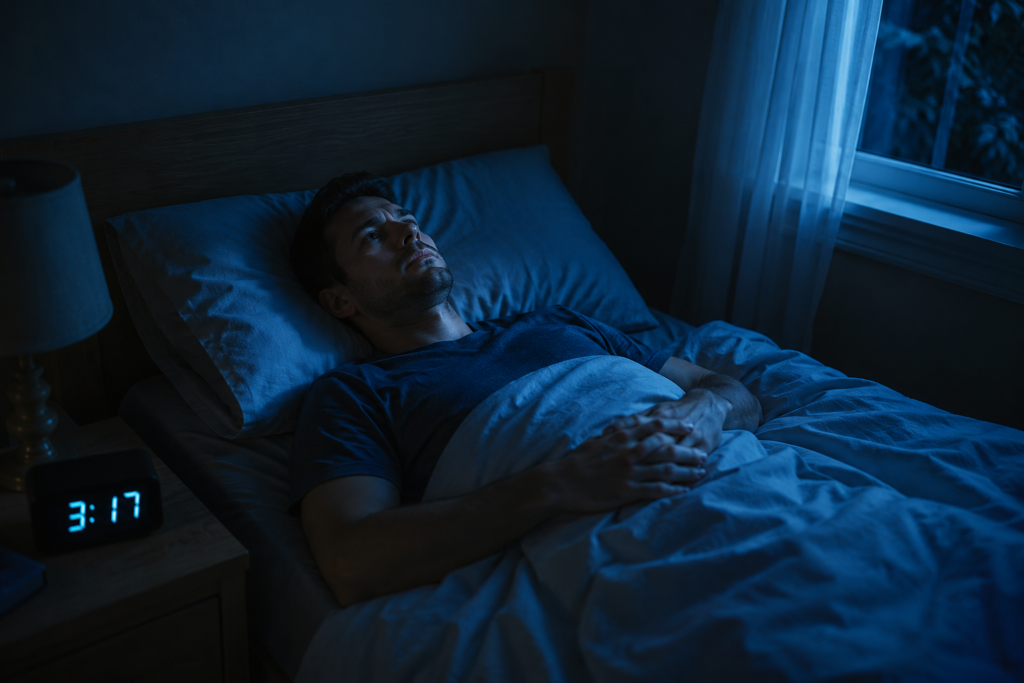
The causes of insomnia are more varied than most people realise — and that’s precisely why a one-size-fits-all solution rarely works. Whether you’re dealing with sleepless nights occasionally or struggling with chronic sleep problems, understanding why it’s happening is the first step toward fixing it.
In this guide, you’ll find nine evidence-based reasons for insomnia, covering everything from stress and anxiety to lifestyle habits and underlying health conditions. No fluff just clear, practical explanations so you can finally start connecting the dots.
1. Stress and Anxiety: The Number One Cause of Insomnia
If you’ve ever lain awake with racing thoughts at night, you already know how powerfully stress affects sleep. When your brain perceives a threat — whether it’s a work deadline or a difficult conversation — it triggers the release of cortisol, a hormone that keeps you alert and ready to respond.
The problem? Your body can’t distinguish between a genuine emergency and everyday worries. That cortisol surge at 11pm is just as disruptive either way.
Here’s the thing: anxiety and insomnia often feed each other. Poor sleep makes anxiety worse, and worse anxiety makes sleep harder. Breaking that cycle usually requires addressing both at once.
2. Depression and Its Impact on Sleep Quality
Depression and sleep are deeply connected — but not always in the way people expect. While some people with depression sleep too much, many experience difficulty falling asleep or wake repeatedly through the night.
Depression alters the brain’s production of serotonin and melatonin, both of which regulate your sleep-wake cycle. This disruption to your circadian rhythm can make restorative sleep feel genuinely out of reach.
If you’re noticing low mood alongside poor sleep quality, it’s worth speaking to your GP. Treating depression often improves sleep significantly, sometimes dramatically.
3. Poor Sleep Hygiene Habits
Sleep hygiene isn’t about cleanliness — it’s about the behaviours and environment that support (or sabotage) good sleep. Common culprits include irregular bedtimes, scrolling on your phone before bed, napping too late in the day, and drinking caffeine after 2pm.
Blue light from screens suppresses melatonin production, signalling to your brain that it’s still daytime. Even 30 minutes of evening screen time can delay sleep onset by up to an hour for some people.
Quick audit: Is your bedroom cool, dark, and quiet? Do you go to bed and wake at roughly the same time each day? If not, these are the first things to fix.
4. Caffeine, Alcohol, and Stimulants
Most people know caffeine can cause trouble sleeping at night — but they underestimate how long it lingers in the body. Caffeine has a half-life of around five to six hours, meaning a 4pm coffee still has half its stimulant effect at 10pm.
Alcohol is trickier. It may help you fall asleep faster, but it fragments the second half of your sleep cycle, reducing REM sleep and leaving you feeling groggy despite a full night in bed.
That “nightcap” isn’t the sleep aid it feels like. In fact, it’s one of the more common reasons for insomnia that people don’t connect until they cut it out.
5. Chronic Pain and Physical Health Conditions
Physical discomfort is a straightforward cause of insomnia, yet it’s often overlooked in favour of psychological explanations. Conditions like arthritis, back pain, fibromyalgia, restless legs syndrome, and sleep apnoea all make it physically difficult to stay asleep.
Sleep apnoea, in particular, is underdiagnosed in the UK. It causes repeated interruptions to breathing during the night, leading to fragmented sleep and severe daytime fatigue — often without the sufferer realising what’s waking them.
If you wake feeling unrefreshed despite spending enough time in bed, a physical cause is worth investigating with your doctor.
6. Medications That Disrupt Sleep
Certain common medications list insomnia as a side effect, and many people don’t make the connection. These include some antidepressants, beta-blockers, corticosteroids, ADHD medications, and even some blood pressure drugs.
It’s not about the medication being “wrong” — it’s about timing and dosage. Taking a stimulating medication in the evening, for example, can push your sleep window back significantly.
If your sleep problems started around the same time as a new prescription, raise it with your GP. There’s often a simple adjustment that helps.
7. Shift Work and Disrupted Circadian Rhythms
Your circadian rhythm is your body’s internal 24-hour clock, governing when you feel alert and when you feel sleepy. Shift work, frequent travel across time zones, and inconsistent schedules all throw this clock off.
Acute insomnia causes in shift workers are well-documented. Without consistent light-dark cues, melatonin production becomes erratic, making it hard to sleep at appropriate times even when you’re exhausted.
If your schedule is variable, strategic light exposure — bright light when you need to be awake, darkness when you need to sleep — is one of the most effective tools available.
8. Overthinking and Learned Insomnia
This is the cause that doesn’t get enough attention. After a period of poor sleep, many people develop what’s called conditioned arousal — the bed itself becomes associated with wakefulness and frustration rather than rest.
You lie down, and your brain automatically shifts into problem-solving mode. It’s not you being dramatic; it’s a learned neurological response. The more you try to force sleep, the more elusive it becomes.
Cognitive Behavioural Therapy for Insomnia (CBT-I) is the gold-standard treatment for this pattern, recommended by the NHS above medication for chronic insomnia.
9. Age-Related Changes in Sleep Architecture
Sleep naturally changes as we age. Older adults tend to spend less time in deep sleep, wake more frequently, and shift to earlier sleep and wake times. These aren’t signs of a disorder — they’re normal physiological changes.
That said, insomnia causes in adults over 60 often include a combination of the above factors: more medications, more chronic health conditions, more disrupted routines, and sometimes social isolation that affects mood and sleep.
Understanding that some change is normal can actually reduce sleep anxiety — which, as we’ve seen, only makes things worse.
If you’re exploring options to support better sleep, Nitrazepam 10mg (Nitrabit) is used under medical guidance for short-term insomnia relief.
For those considering prescription support, Zopiclone 7.5mg tablets are a commonly prescribed short-term sleep aid in the UK — always consult your GP before use.
FAQ: Common Questions About Insomnia Causes
Q: What is the most common cause of insomnia?
A: Stress and anxiety are the most frequently reported causes of insomnia in adults. When the mind remains in a heightened state of alertness, it prevents the brain from transitioning into the relaxed state needed for sleep. Addressing stress through relaxation techniques, therapy, or lifestyle changes can significantly improve sleep quality.
Q: What causes chronic insomnia?
A: Chronic insomnia — defined as difficulty sleeping at least three nights per week for three months or more — is usually driven by a combination of factors. These often include an underlying mental health condition such as anxiety or depression, learned sleep avoidance behaviours, and poor sleep hygiene. CBT-I is the most effective long-term treatment.
Q: Can insomnia be caused by diet?
A: Yes, diet plays a meaningful role. Caffeine and alcohol are the most well-known culprits, but heavy meals close to bedtime, high sugar intake, and even some nutritional deficiencies (such as low magnesium) can disrupt sleep. Keeping a food and sleep diary for two weeks can help identify patterns specific to you.
Q: Why can’t I sleep even when I’m tired?
A: This is a classic sign of what’s called hyperarousal — your nervous system is in an activated state despite physical fatigue. It’s common in people with anxiety, those who have developed conditioned insomnia, or those whose circadian rhythm is out of sync. It doesn’t mean something is seriously wrong, but it does mean the cause needs identifying.
Q: Is insomnia a symptom of something else?
A: Frequently, yes. Insomnia is often a secondary symptom of conditions like depression, anxiety disorders, sleep apnoea, chronic pain, or thyroid issues. Treating the root condition usually improves sleep. If your insomnia came on suddenly without an obvious trigger, a medical review is worthwhile.
Q: Do hormonal changes cause insomnia?
A: Absolutely. Hormonal fluctuations during the menstrual cycle, pregnancy, perimenopause, and menopause are significant causes of insomnia in women. Falling oestrogen levels affect body temperature regulation and melatonin production, making sleep lighter and more fragmented. Speaking with a GP about hormonal support can make a real difference.
Q: How long does acute insomnia last?
A: Acute insomnia is short-term, typically triggered by a specific stressor — a bereavement, exam period, or life change. It usually resolves within a few days to a few weeks once the triggering situation passes. If it persists beyond a month, it may be developing into chronic insomnia and is worth discussing with a healthcare professional.
Q: Can insomnia go away on its own?
A: Acute insomnia often does resolve without intervention, particularly once the triggering stressor is removed. Chronic insomnia, however, rarely improves without some form of active treatment. Good sleep hygiene, addressing underlying causes, and CBT-I are all effective starting points — and the sooner you intervene, the better the outcome tends to be.
Conclusion
Insomnia is rarely caused by a single thing. More often, it’s a combination of stress, habits, health, and sometimes just the way your brain has learned to respond to bedtime.
The three most important takeaways from this guide: first, identifying your specific cause matters more than applying generic sleep advice. Second, psychological and behavioural causes particularly learned insomnia — are just as real and treatable as physical ones. Third, chronic sleep problems respond best to structured approaches like CBT-I, not just willpower or supplements alone.
If you’re struggling with persistent sleepless nights, Zopisign 10mg is one option some adults use short-term under medical supervision but always speak with your GP to find the approach that’s right for your situation