
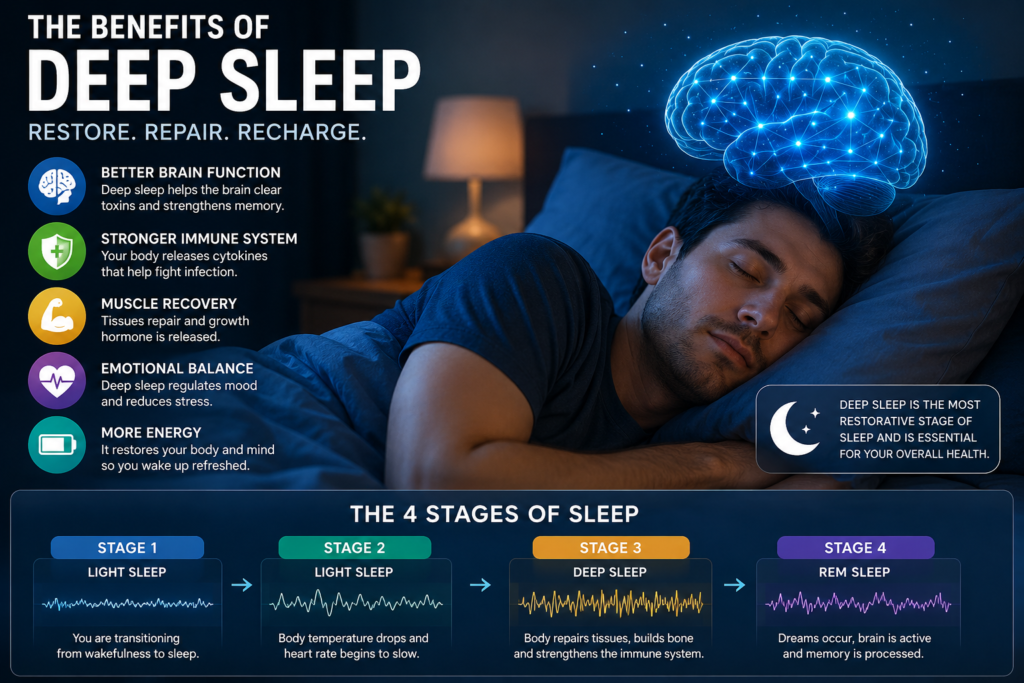
Benefits of Deep Sleep
Sleep is more than simply resting your body. During the night, your brain and body move through different sleep stages, and deep sleep is the stage responsible for much of your physical and mental recovery. Understanding the benefits of deep sleep can help you improve your sleep habits and wake up feeling refreshed instead of exhausted.
Many people focus on how many hours they sleep, but sleep quality matters just as much. You might spend eight hours in bed and still feel tired if you don’t get enough slow wave sleep. I’ve seen this happen with people who keep irregular bedtimes, rely on caffeine late in the day or ignore poor sleep hygiene.
This guide explains why deep sleep is important, what happens during deep sleep, and practical ways to improve your healthy sleep cycle naturally.
Deep sleep is the most restorative stage of non REM sleep. During this stage, your brain processes memories, your body repairs tissues, growth hormone is released, and your immune system becomes more active. Getting enough deep sleep supports better physical recovery, mental performance and long-term health.
What Is Deep Sleep?
Deep sleep, often called slow wave sleep, is the third stage of non REM sleep. Your breathing slows, heart rate drops and brain waves become much slower than during lighter sleep stages.
Unlike REM sleep, when dreaming is most common, deep sleep is when your body focuses on repair and nighttime recovery. This stage is difficult to wake up from because your brain is fully engaged in restorative sleep.
What Happens During Deep Sleep?
During deep sleep your body:
- Repairs muscles and tissues
- Releases human growth hormone
- Strengthens immune function
- Consolidates memories
- Supports healthy brain function
- Restores energy stores
Benefits of Deep Sleep for Your Body and Mind
The health benefits of deep sleep extend well beyond simply feeling rested.
1. Supports Brain Health
Deep sleep for brain health is one of its biggest advantages. During this stage, your brain organises information collected throughout the day and strengthens important memories.
Students, professionals and older adults all benefit from consistent deep sleep because it improves concentration, decision-making and learning ability.
2. Improves Memory
Deep sleep and memory work together closely.
If you’ve ever revised for an exam and slept well afterwards, you’ve probably noticed better recall the next day. That’s because your brain transfers short-term information into longer-term storage while you sleep.
3. Helps Muscle Recovery
People who exercise regularly experience major deep sleep benefits.
During this stage, muscle fibres repair, protein synthesis increases and growth hormone supports recovery after training sessions.
For anyone recovering from illness or intense physical activity, deep sleep for recovery is just as important as nutrition.
Adults generally spend around 13% to 23% of total sleep in deep sleep, although this varies with age and overall health. Maintaining a consistent bedtime, limiting alcohol and following good sleep hygiene can help improve deep sleep quality.
Why Deep Sleep Matters for Long-Term Health
Many people ask, “Why is deep sleep important?”
The answer is simple. Without enough deep sleep, your body struggles to repair itself properly.
Long-term sleep deprivation may affect:
- Immune response
- Mood regulation
- Blood sugar control
- Heart health
- Cognitive performance
This is why the importance of deep sleep becomes even greater as you age.
Deep Sleep Benefits for Your Immune System
Your immune system becomes more active while you’re asleep.
Deep sleep for immune system function allows your body to produce proteins that help fight infection and recover after illness.
People often notice they sleep longer when they’re unwell. That’s a normal response because the body needs extra restorative sleep to recover.
Deep Sleep and Mental Health
Sleep and emotional wellbeing are closely connected.
Deep sleep and mental health influence one another every night. Poor sleep can increase irritability, stress and emotional fatigue, while healthy sleep patterns help your brain process emotions more effectively.
If you regularly wake feeling anxious or mentally drained, improving your sleep duration and bedtime routine may help.
How to Get More Deep Sleep Naturally
Improving your deep sleep cycle doesn’t usually require expensive equipment.
Start with these practical habits:
- Keep the same bedtime every day, including weekends.
- Reduce caffeine after lunchtime.
- Make your bedroom cool, dark and quiet.
- Avoid heavy meals close to bedtime.
- Exercise during the day.
- Limit screen time before sleeping.
- Follow a healthy bedtime routine every evening.
Many people also benefit from relaxation techniques such as reading, gentle stretching or controlled breathing before bed.
If ongoing insomnia is affecting your sleep, speak with a healthcare professional before considering sleep medication. Some people may discuss treatments such as Zopisign 10mg tablets with their doctor when short-term support is appropriate.
Common Reasons You’re Missing Deep Sleep
Several habits reduce deep sleep without people realising it.
These include:
- Drinking alcohol before bed
- Excess evening caffeine
- Irregular sleep schedules
- Stress
- Sleep disorders such as sleep apnoea
- Late-night screen use
Small lifestyle changes often improve better sleep quality over several weeks.
FAQs
Q: How much deep sleep should adults get?
A: Most healthy adults spend around 13% to 23% of total sleep in deep sleep. The exact amount varies with age, genetics and overall health. Consistency matters more than chasing a specific number.
Q: Is deep sleep more important than REM sleep?
A: Both stages are important. Deep sleep mainly repairs the body and strengthens immunity, while REM sleep supports emotional processing, creativity and learning.
Q: What happens if you don’t get enough deep sleep?
A: You may feel tired, struggle to concentrate and recover more slowly after exercise. Long-term poor sleep can also affect mood, metabolism and immune function.
Q: Can exercise increase deep sleep?
A: Yes. Regular physical activity often improves sleep quality and increases deep sleep, particularly when exercise takes place earlier in the day.
Q: Does age affect deep sleep?
A: Yes. Children spend much more time in deep sleep than older adults. Deep sleep naturally decreases with age, although healthy habits still make a noticeable difference.
Q: Can medication improve deep sleep?
A: Some prescription medicines may help certain people with short-term sleep problems. These should always be used under medical supervision. Your healthcare provider may also discuss options such as Nitrabit 10 if appropriate for your situation.
Conclusion
The benefits of deep sleep reach almost every part of your health. Your brain stores memories more effectively, your muscles recover faster, your immune system works more efficiently and your energy levels improve throughout the day.
The good news is that better deep sleep often starts with simple habits. Keeping a regular bedtime, reducing evening caffeine and following good sleep hygiene can produce noticeable improvements over time.
If poor sleep continues for several weeks or affects your daily life, speak with a qualified healthcare professional. Finding and treating the underlying cause is often the most effective path to better restorative sleep.